
Bookmark Wisdom!
A little dose of wise words come handy to deal with life. Good times or challenging phases, here’s an array of books by Gurudev on life, love, relationships, spirituality, Master etc. Dive into these aphorisms, paragraphs and pages of light, joy and love.


Education
Ishavasya, Katha, Kena and Yogasara- show you the beauty of surrender and make your life a celebration.

Bhagavad Gita
By taking examples from everyday life, Gurudev makes Bhagavad Gita simple and yet explores great depth in these verses.

Gurudev: On the Plateau of the Peak
Discover more about Gurudev and his life in this exclusive biography written by his sister, Bhanumathi Narasimhan.

Facts you didn’t know about happiness
There are many ideas about what is happiness. Here’s a short read on all that you need to know about happiness.

How one man fought the odds to bring low-cost toilets
Venkatesh Mangalram, ex-businessman and an Art of Living faculty, has been on a mission to build toilets in rural areas. Read his inspiring story.

Beacon Gram Panchayat Project
An exemplary partnership between the civil society and Government of Jharkhand, empowering Panchayats and representatives of Panchayati Raj Institutions (PRIs).

Why Chhichhore engineers make us question inner peace
Cinema and literature hold a mirror to society. The movie Chhichhore holds one such mirror for us - it makes us ponder over many important things of life.

Why every Boo Radley must feel included
How do we fight a culture of ostracization in a society? Boo Radley has a lesson to give to the world.
Sri Sri Ravi Shankar
Founder, Art of Living Foundation
"Whenever you are in love and feel joyous, your mind is in the present. That is when you achieve yoga. The art of living lies in being in the present moment."

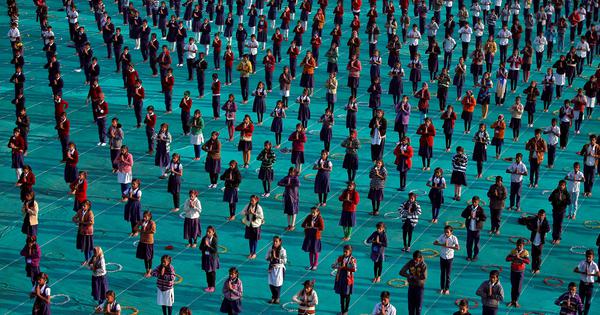
How to do yoga meditation
Yoga meditation is done without moving the body. When you do this mindful practice, you will get into position, either sitting or lying down peacefully, letting thoughts and feelings pass without judging them. You keep your eyes closed and your palms facing upward to the sky. Yoga meditation is often done in a class or with someone instructing you during the meditation, though you may find you can practice it on your own once you have experience with it.

Consciousness is often likened to a stream, shifting and changing smoothly as it passes over the terrain. Meditation is one deliberate means of changing the course of this stream, and in turn, altering how you perceive and respond to the world around you.
Research has shown that meditation can have both physiological and psychological effects. Some positive physiological effects include a lowered state of physical arousal, reduced respiration rate, decreased heart rate, changes in brain wave patterns, and lowered stress.